Unpacking the Identity: What Exactly Is Salisbury Steak?
When you hear "Salisbury Steak," does your mind conjure images of a juicy, seared cut of prime beef? If so, you're not alone. The name itself is a master of disguise, hinting at a culinary experience far grander than its true identity. Despite its sophisticated moniker, Salisbury steak isn't a steak in the traditional sense. It's a beloved, hearty dish rooted deeply in American comfort food history, a culinary chameleon that has graced dinner tables for over a century. So, what exactly is this classic dish, and why does it carry the prestigious "steak" title?
At its core,
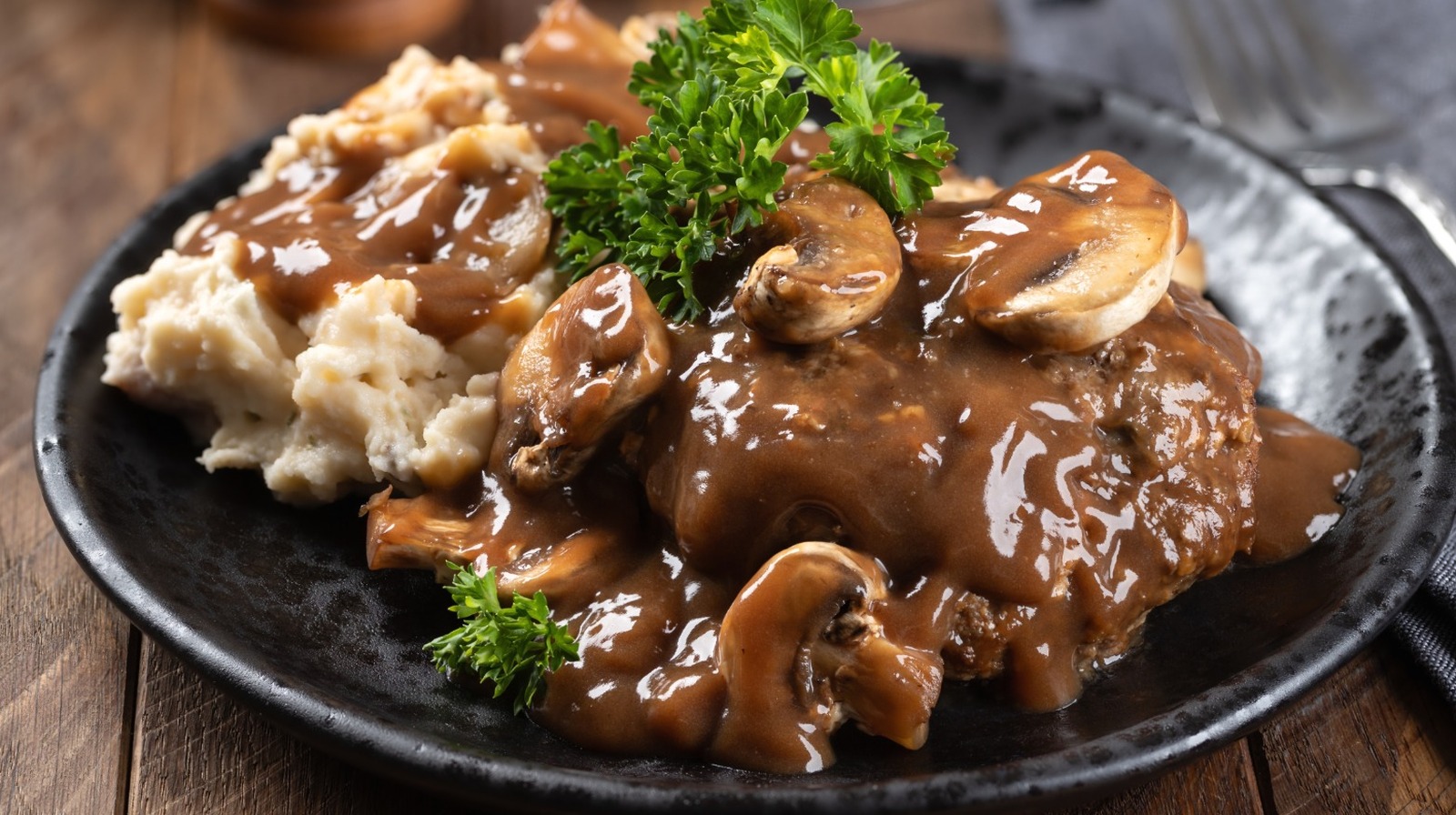
Salisbury steak is a well-seasoned patty made from ground beef, often pan-fried or baked, and then generously smothered in a rich, savory gravy, typically featuring mushrooms and onions. Think of it as a sophisticated cousin to the hamburger or a more substantial, flattened meatball. Unlike a traditional steak, which is a single cut of muscle from a cow, Salisbury steak is a composite dish. The magic happens through the careful blending of ground beef with ingredients like breadcrumbs or crackers, eggs, and a medley of seasonings such as Worcestershire sauce, onion powder, garlic powder, salt, and pepper. This combination creates a tender, flavorful patty that, when paired with its signature gravy, transforms into something far greater than its individual components.
The texture is distinctly different from a conventional steak. Instead of the fibrous, chewable bite of a sirloin or ribeye, Salisbury steak offers a softer, more yielding experience, perfect for soaking up every drop of that luscious gravy. It’s this unique composition that makes it an economical and versatile alternative to more expensive cuts of meat, providing a satisfying, protein-rich meal without breaking the bank. While some people affectionately refer to it as "hamburger steak," the addition of a rich, complex gravy is what truly defines and elevates the classic Salisbury steak.
From Health Food to Comfort Classic: The Surprising History of Salisbury Steak
The story of Salisbury steak is far richer and more unexpected than many realize, tracing its roots back to the late 19th century and a man named Dr. James H. Salisbury. Contrary to its modern image as a hearty comfort food, Salisbury steak was originally conceived as part of a radical health regimen. Dr. Salisbury, an American physician and chemist, was a proponent of a meat-heavy, low-carbohydrate diet, believing that many ailments, particularly those related to digestion, could be cured by consuming specific amounts of lean meat. He recommended eating his specially prepared "steak" three times a day, accompanied by large quantities of water to "wash out" the system.
His original recipe called for lean beef, minced finely and pressed into patties, avoiding fatty cuts and seasonings that he deemed detrimental to health. It was a strict dietary prescription, a far cry from the rich, gravy-laden dish we know today. Dr. Salisbury’s work, published in his 1888 book "The Relation of Alimentation and Disease," emphasized the importance of red meat, especially beef, for its perceived ability to improve strength and vitality. He believed that vegetables and starches fermented in the gut, causing various diseases, and thus advocated for a diet primarily consisting of lean chopped beef patties.
However, as medical understanding evolved, Dr. Salisbury's theories faded, but his "steak" persisted, adapting to changing tastes and culinary trends. By the mid-20th century, Salisbury steak had shed its medicinal façade and fully embraced its destiny as an accessible, satisfying meal. It became a staple in American diners, school cafeterias, and, perhaps most famously, the quintessential TV dinner. Its inclusion in these convenience meals solidified its status as a nostalgic, fuss-free option for busy families, marking its permanent place in the pantheon of classic American comfort foods. The dish's enduring appeal lies in its adaptability and its ability to evoke a sense of home and simplicity. It's a testament to how food can transcend its initial purpose, transforming from a clinical prescription into a beloved symbol of warmth and familiarity.
Beyond the Box: Why Homemade Salisbury Steak Reigns Supreme
For many, the mention of Salisbury steak immediately conjures images of the frozen, compartmentalized TV dinner trays of yesteryear. While these convenience meals introduced generations to the dish, they often left much to be desired in terms of flavor and quality. The true magic of Salisbury steak, however, unfolds when it's prepared from scratch in your own kitchen. Homemade
Salisbury steak is a revelation, a vibrant and robust dish that bears little resemblance to its mass-produced counterpart.
When you embark on making Salisbury steak at home, you have complete control over the ingredients. You can select high-quality ground beef, ensuring a balance of lean meat and just enough fat for succulence. You can finely tune the seasonings to your personal preference, adding depth with fresh garlic, sautéed onions, or a splash of Worcestershire sauce. But perhaps the most significant upgrade comes in the form of the gravy. While store-bought versions can be bland, a homemade gravy is a symphony of flavors—rich beef broth, sautéed mushrooms, caramelized onions, and perhaps a touch of red wine or a hint of herbs like thyme. This gravy isn't just a covering; it's an integral component, infusing the patties with moisture and an irresistible savory punch.
The act of preparing Salisbury steak from scratch also contributes to its appeal. It’s a process that doesn't demand gourmet skills but rewards attention to detail. The aroma filling your kitchen as the patties brown and the gravy simmers is an experience in itself, promising a hearty and heartwarming meal. It's precisely this elevated experience that makes homemade
Salisbury steak well-deserving of a modern-day revival, moving it from the realm of "retro" to genuinely delicious. If you're ready to rediscover this classic with a homemade touch, you might enjoy our take on a truly satisfying recipe:
Salisbury Steak Comeback: The Ultimate Retro Comfort Food Recipe.
Embracing the Comeback: Modernizing a Classic
The appeal of Salisbury steak extends beyond nostalgia. It's incredibly versatile. It offers a comforting alternative to routine ground beef dishes like burgers or pasta sauces, providing a unique flavor profile that satisfies the craving for something substantial and savory. Its relatively simple ingredients and straightforward preparation also make it an economical choice for feeding a family, embodying the spirit of resourceful home cooking. By embracing fresh ingredients and thoughtful preparation, this century-old dish proves it has plenty of life left, ready to claim its rightful place as a beloved weeknight dinner staple once again.
Mastering the Art of Salisbury Steak: Tips for the Perfect Dish
Crafting the perfect Salisbury steak is more art than science, but a few key techniques can elevate your dish from good to unforgettable. Here’s how to ensure your homemade version truly shines:
- Choose Your Beef Wisely: While lean ground beef might seem healthier, a blend with about 80/20 fat content (80% lean, 20% fat) provides superior flavor and juiciness. The fat renders during cooking, keeping the patties moist and tender.
- Seasoning is Key: Don't be shy with seasonings. Beyond salt and black pepper, ingredients like onion powder, garlic powder, a generous splash of Worcestershire sauce, and even a touch of Dijon mustard can add incredible depth. A little finely chopped fresh parsley or thyme can also brighten the flavor profile.
- Don't Overmix: When combining the ground beef with other ingredients (like breadcrumbs, egg, and seasonings), mix just until everything is incorporated. Overmixing can lead to tough, dense patties.
- Form Uniform Patties: Aim for patties that are about ½ to ¾ inch thick and roughly oval or round. Consistent thickness ensures even cooking. Making a small indentation in the center can prevent them from bulging in the middle during frying.
- Build Gravy Flavor: The gravy is arguably the star. After browning the patties, use the flavorful fond (the browned bits left in the pan) to build your sauce. Sauté onions and mushrooms in these drippings until deeply caramelized. Deglaze the pan with a liquid like beef broth or red wine, scraping up all those flavorful bits. This creates a foundation of rich taste.
- Thicken Properly: A roux (equal parts fat and flour cooked together) is the classic way to thicken gravy. Cook it for a minute or two to eliminate the raw flour taste before gradually whisking in your liquid.
- Simmer for Depth: Once the gravy is assembled, let it gently simmer for at least 10-15 minutes, allowing the flavors to meld and deepen. You can even return the cooked patties to the simmering gravy for the last few minutes of cooking, allowing them to absorb more of that wonderful flavor.
- Classic Pairings: Salisbury steak is traditionally served with mashed potatoes or egg noodles, which are perfect for soaking up every drop of that luscious gravy. Steamed green beans or a simple side salad offer a fresh contrast. For a speedy and satisfying meal, check out our guide: Easy Weeknight Salisbury Steak: Ground Beef & Mushroom Gravy Dinner.
So, is Salisbury steak
really steak? The definitive answer is no, not in the traditional sense of a cut of meat. It is, however, a magnificent, well-seasoned ground beef patty, lovingly draped in a rich, savory gravy, that has carved its own unique and cherished place in culinary history. From its unexpected beginnings as a health food prescription to its enduring legacy as a quintessential American comfort dish, Salisbury steak has proven its resilience and adaptability. Far more than just a relic of the TV dinner era, homemade
Salisbury steak offers a deeply satisfying, economical, and delicious meal that deserves its moment in the spotlight. It’s a testament to the power of simple ingredients, thoughtfully prepared, to create a dish that truly warms the heart and nourishes the soul.